How to Choose Between a Soft Starter and a Variable Frequency Drive?
공유하기
Abstract:
Both Variable Frequency Drives (VFDs) and soft starters can achieve energy savings, control, and equipment protection by adjusting motor operation. This article compares the working principles, functional characteristics, application requirements, load characteristics, energy efficiency, power consumption, protection capabilities, and overall costs of soft starters and VFDs to analyze the differences between them. The study shows that soft starters are best suited for simple constant-speed systems, while VFDs are more appropriate for applications that require precise speed control, energy optimization, enhanced protection features, and integration with advanced automation systems.
Introduction:
In modern industrial and commercial systems, effective motor control is essential for ensuring operational reliability, energy efficiency, and equipment longevity. The most commonly used motor-control devices include soft starters and Variable Frequency Drives (VFDs). Although both technologies are designed to reduce mechanical and electrical stress during motor startup, they operate on different principles and deliver different levels of performance. Choosing the right solution requires careful evaluation of application requirements, cost constraints, energy-efficiency goals, and system-integration needs. A proper choice ultimately brings greater commercial value to the user.
1. Differences in Operating Principles and Functions
A soft starter controls the motor’s initial voltage, gradually increasing it to reduce inrush current and minimize mechanical impact. After the motor reaches full speed, the soft starter typically bypasses itself, allowing the motor to run directly at full line voltage. Its core functions are limited to smooth starting and stopping, and it does not regulate speed during operation.
A Variable Frequency Drive (VFD), on the other hand, adjusts the motor’s operating frequency and voltage through AC-DC-AC conversion. This enables variable-speed operation and precise control over torque and acceleration curves. We have previously discussed the principles of VFDs in the paper “Principles of Variable Frequency Drives (VFDs)”. Unlike soft starters, VFDs provide continuous speed regulation, dynamic braking, partial-load energy savings, and advanced protection features.
In short:
• Soft Starter = Smooth start/stop + constant-speed operation
• VFD = Smooth start/stop + continuous variable-speed control
2. Key Factors to Consider When Choosing
2.1 Application Requirements and Load Characteristics
Constant-speed applications typically do not require variable-speed control. Examples include fully loaded water pumps or conveyors with constant output. In such cases, a soft starter may already be sufficient.
Variable-speed applications require precise control under different load conditions. These include HVAC fans, pumps in pressure-control systems, mixers, centrifugal machinery, and equipment requiring process optimization. For these scenarios, a VFD is the ideal choice.
2.2 Energy Efficiency and Power Consumption
Soft starters cannot save energy during steady-state operation because the motor runs directly from the mains at full speed. Their energy-saving benefit is limited only to startup by reducing inrush current.
VFDs can significantly reduce energy consumption in systems where load varies with motor speed. Since the power consumption of centrifugal loads is proportional to the cube of the speed, even a 20% reduction in speed can result in substantial energy savings. Creamer, J. & Van Hemert, G. (2010) noted that modern VFD technology can reduce energy usage by up to 30%.
Therefore, in terms of energy savings, VFDs clearly provide superior advantages.
2.3 Motor and System Protection Requirements
Soft starters provide basic protections such as overload, undervoltage, and phase-loss protection, but their protection capability is limited.
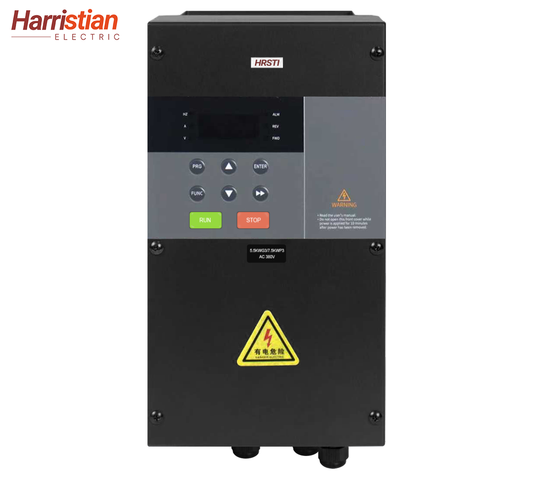
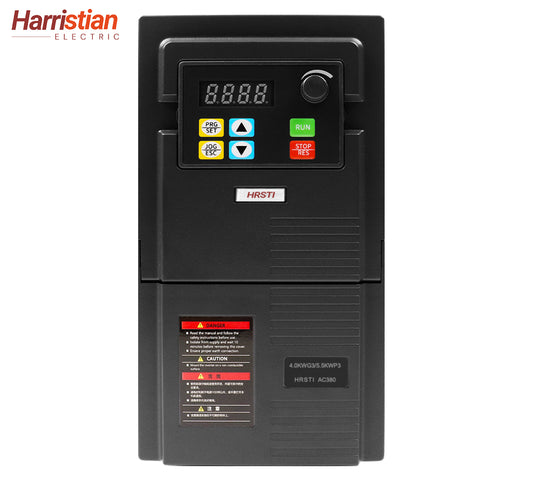
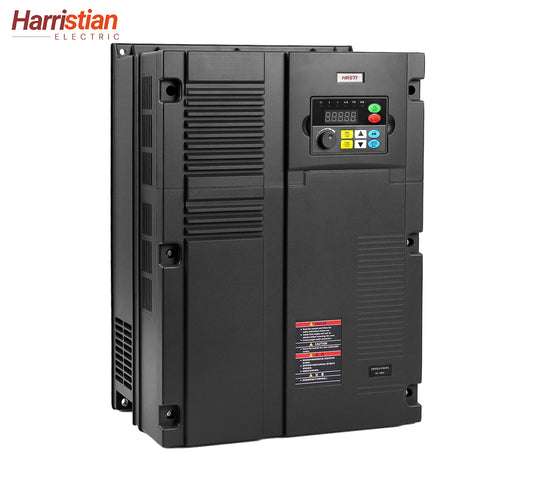
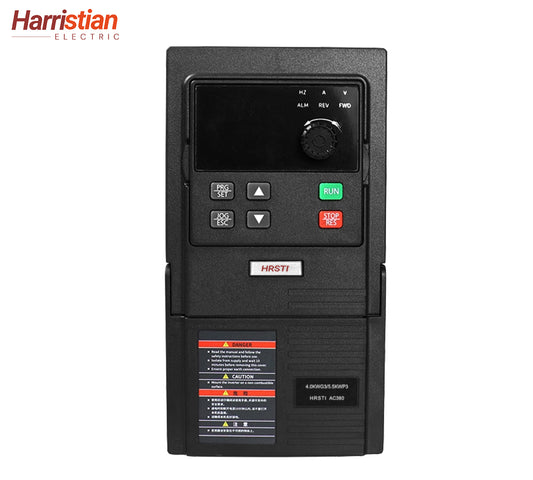
VFDs, however, offer comprehensive protection functions. Using the HRSTI 720 series as an example, protection features include:
• Overtemperature protection
• Overload protection
• Overvoltage and undervoltage protection
• Overcurrent and undercurrent protection
• PID control for process regulation
• Communication interfaces (e.g., Modbus)
For systems requiring advanced protection and process control, the VFD is the better choice.
3. Cost Considerations
Soft starters are generally more economical than VFDs. For higher-power motors, the cost difference can be substantial. If the system does not require variable-speed control, a soft starter is the more cost-effective option.
However, for applications that do require speed control, VFDs not only meet functional needs but can also reduce long-term energy costs. Still, VFDs introduce additional considerations:
• Higher maintenance requirements
• Potential harmonic distortion, requiring filters
• Additional heat generation, possibly requiring cooling systems (installation-environment considerations)
Thus, although VFDs improve operational efficiency, they also increase system complexity.
Long-term cost evaluation must consider multiple dimensions: purchase cost, installation cost, energy-saving benefits, maintenance cost, expected operating life, and required process performance.
Conclusion;
When to Choose a Soft Starter
A soft starter is more advantageous if the following conditions apply:
• The motor operates only at full speed
• Smooth starting and stopping are required, but speed control is unnecessary
• Budget is limited
• The system must remain simple and easy to maintain
• Harmonics must be minimized
When to Choose a VFD
A VFD is the better choice if:
• The process requires variable-speed operation
• Energy savings are essential
• Precise control of torque, acceleration, or flow is required
• The application needs communication with PLCs or automation systems
• Motor and system protection are critical
• Braking, reversing, or multi-speed operation is required
Selecting between a soft starter and a VFD requires a clear understanding of system needs, motor characteristics, and economic considerations. Soft starters are ideal for applications requiring only smooth startup and constant-speed operation, offering simplicity and cost advantages. VFDs, however, deliver superior control, energy savings, and protection, making them the preferred solution for dynamic or energy-intensive processes.
Ultimately, the decision should balance performance requirements and long-term economic benefits. Neither is universally better; the optimal choice depends on application characteristics, energy-consumption factors, and system-integration needs. The more appropriate solution for the specific scenario will deliver greater benefits to the user.
Reference:
Creamer, J. & Van Hemert, G. (2010) ‘Energy savings – VFDs and more’, World Pumps, 2010(8), pp. 24-26, 28. doi:10.1016/S0262-1762(10)70226-1.